


Page 394 - TBE_Book_V2_2019
P. 394
Chapter 12b: TBE in Slovakia
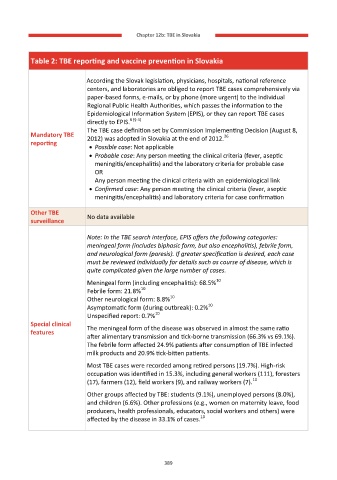
Table 2: TBE reporting and vaccine prevention in Slovakia
According the Slovak legislation, physicians, hospitals, national reference
centers, and laboratories are obliged to report TBE cases comprehensively via
paper-based forms, e-mails, or by phone (more urgent) to the individual
Regional Public Health Authorities, which passes the information to the
Epidemiological Information System (EPIS), or they can report TBE cases
directly to EPIS. 6 (§ 4)
The TBE case definition set by Commission Implementing Decision (August 8,
Mandatory TBE 2012) was adopted in Slovakia at the end of 2012.
26
reporting
Possible case: Not applicable
Probable case: Any person meeting the clinical criteria (fever, aseptic
meningitis/encephalitis) and the laboratory criteria for probable case
OR
Any person meeting the clinical criteria with an epidemiological link
Confirmed case: Any person meeting the clinical criteria (fever, aseptic
meningitis/encephalitis) and laboratory criteria for case confirmation
Other TBE
No data available
surveillance
Note: In the TBE search interface, EPIS offers the following categories:
meningeal form (includes biphasic form, but also encephalitis), febrile form,
and neurological form (paresis). If greater specification is desired, each case
must be reviewed individually for details such as course of disease, which is
quite complicated given the large number of cases.
10
Meningeal form (including encephalitis): 68.5%
10
Febrile form: 21.8%
10
Other neurological form: 8.8%
10
Asymptomatic form (during outbreak): 0.2%
10
Unspecified report: 0.7%
Special clinical The meningeal form of the disease was observed in almost the same ratio
features
after alimentary transmission and tick-borne transmission (66.3% vs 69.1%).
The febrile form affected 24.9% patients after consumption of TBE infected
milk products and 20.9% tick-bitten patients.
Most TBE cases were recorded among retired persons (19.7%). High-risk
occupation was identified in 15.3%, including general workers (111), foresters
10
(17), farmers (12), field workers (9), and railway workers (7).
Other groups affected by TBE: students (9.1%), unemployed persons (8.0%),
and children (6.6%). Other professions (e.g., women on maternity leave, food
producers, health professionals, educators, social workers and others) were
10
affected by the disease in 33.1% of cases.
389

