


Page 404 - TBE_Book_V2_2019
P. 404
Chapter 12b: TBE in Slovenia


          on  the  body.  The  estimated  duration  of  tick   camping,  32.8%),  mushroom  or  berry  picking
          attachment was less than 6 h in 23.5% of TBE   (30.2%), or farming (23.3%). Almost two-thirds
          cases.  Long  attachments  (more  than  24  h)   of  TBE  patients  reported  that  they  had
          were reported by 10% of the patients. The tick   practiced  at  least  one  of  the  recommended
          bite  occurred  while  the  TBE  patients  were   preventive  measures,  most  frequently  self-
                                                                                       8
          engaged  in  leisure  time  activities  (sports  or   inspection, and least often repellent use.
                                                                                    3
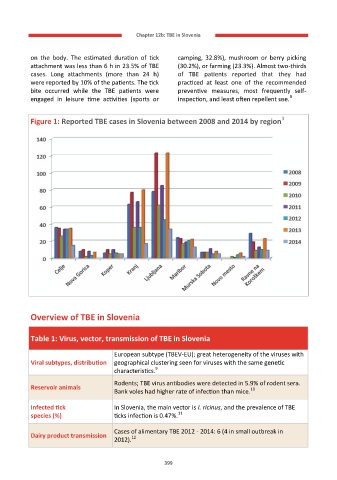
          Figure 1: Reported TBE cases in Slovenia between 2008 and 2014 by region


          Overview of TBE in Slovenia


           Table 1: Virus, vector, transmission of TBE in Slovenia

                                   European subtype (TBEV-EU); great heterogeneity of the viruses with
          Viral subtypes, distribution  geographical clustering seen for viruses with the same genetic
                                               9
                                   characteristics.
                                   Rodents; TBE virus antibodies were detected in 5.9% of rodent sera.
          Reservoir animals                                                10
                                   Bank voles had higher rate of infection than mice.

          Infected tick            In Slovenia, the main vector is I. ricinus, and the prevalence of TBE
                                                      11
          species (%)              ticks infection is 0.47%.
                                   Cases of alimentary TBE 2012 - 2014: 6 (4 in small outbreak in
          Dairy product transmission    12
                                   2012).


                                                  399

