


Page 190 - TBE_Book_V2_2019
P. 190
Chapter 10: Diagnosis


          The  test  was  also  used  in  seroprevalence   of  titer.  The  HI  test  is  still  used  in  several
          studies  because  hemagglutinating  antibodies   countries and is recommended by the World
          usually persist for many years.             Health   Organization   for   distinguishing
                                                      between  primary  and  secondary  flavivirus
          A further development in the HI test was the   infection.
          treatment  of  serum  samples  with  2-
          mercaptoethanol  in  order  to  reduce  the   Immunofluorescence assay
          disulfide  bonds  present  in  native  IgM
                                               15
          pentamers to leave inactive IgM monomers.    The use of IF to detect antibodies against TBEV
          This  additional  treatment  step  will  cause  HI   usually  involves  indirect  assays  that  require
          titers  to  decrease  in  the  presence  of  IgM   cells infected with TBEV to be spotted, fixed,
          antibodies,  with  a  significant  (at  least  4-fold)   and permeabilized on slides.  A characteristic,
                                                                             16
          decrease  in  HI  titer  indicating  acute  TBEV   fluorescent,  cytoplasmic  staining  pattern  can
          infection.                                  be seen and quantified using serial dilutions of
                                                      the serum being tested; antibody isotypes can
          One disadvantage of the HI test is that there is   be distinguished using fluorescent conjugates
                                               14
          a  broad  cross-reactivity  with  all  flaviviruses    specific  to  IgM  or  IgG.  For  IgM  testing,  the
          and therefore samples from patients infected   higher-affinity  IgG  antibodies  must  be
          with  more  than  1  flavivirus,  or  from  those   removed  in  order  to  avoid  false-negative
          recently  vaccinated, may lead to non-specific
                                                      results. The sensitivity of IF assays appears to
          cross-reaction  and  inaccurate  determinations

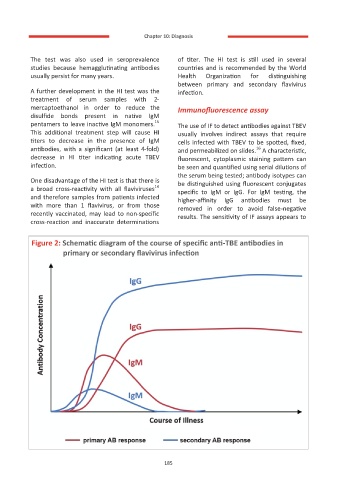
            Figure 2: Schematic diagram of the course of specific anti-TBE antibodies in
                    primary or secondary flavivirus infection


                                                  185
                                                  185

