


Page 303 - TBE_Book_V2_2019
P. 303
Chapter 12b: TBE in Hungary


          Overview of TBE in Hungary


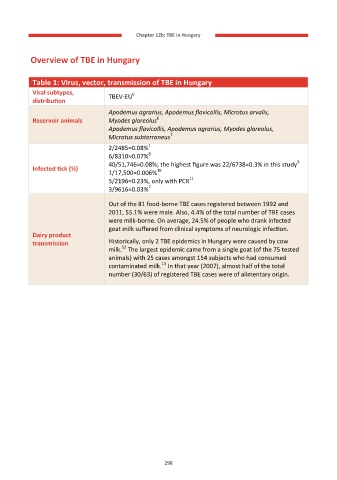
           Table 1: Virus, vector, transmission of TBE in Hungary
           Viral subtypes,       TBEV-EU
                                        6
           distribution
                                 Apodemus agrarius, Apodemus flavicollis, Microtus arvalis,
                                               6
           Reservoir animals     Myodes glareolus
                                 Apodemus flavicollis, Apodemus agrarius, Myodes glareolus,
                                                   7
                                 Microtus subterraneus
                                             1
                                 2/2485=0.08%
                                             8
                                 6/8310≈0.07%
                                                                                         9
                                 40/51,746≈0.08%; the highest figure was 22/6738≈0.3% in this study
           Infected tick (%)                   10
                                 1/17,500≈0.006%
                                                         11
                                 5/2196≈0.23%, only with PCR
                                             7
                                 3/9616≈0.03%
                                 Out of the 81 food-borne TBE cases registered between 1992 and
                                 2011, 55.1% were male. Also, 4.4% of the total number of TBE cases
                                 were milk-borne. On average, 24.5% of people who drank infected
                                 goat milk suffered from clinical symptoms of neurologic infection.
           Dairy product
           transmission          Historically, only 2 TBE epidemics in Hungary were caused by cow
                                     12
                                 milk.  The largest epidemic came from a single goat (of the 75 tested
                                 animals) with 25 cases amongst 154 subjects who had consumed
                                                 13
                                 contaminated milk.  In that year (2007), almost half of the total
                                 number (30/63) of registered TBE cases were of alimentary origin.


                                                  298

