


Page 436 - TBE_Book_V2_2019
P. 436
Chapter 13: TBE as a matter of public health


          Today, most people (90%) who will ultimately   TBE affects all age groups. The severity of the
          develop TBE visit endemic areas in pursuit of   disease increases with age. Older generations
          recreational  activities.  In  central  Europe  and   and retired people are more active today and
          the Baltic states, recent increases in TBE may   especially  at  risk  of  acquiring  TBE.  This  is
          have  arisen  largely  from  changes  in  human   especially  true  for  elderly  travelers  (both
          behavior that have brought more people into   domestic as well as from other regions) since
                                6
          contact with infected ticks.                Europe  is  generally  considered  a  safe
          Infection with TBEV may also happen at home   destination  requiring  no  specific  preparation,
          when infected ticks inadvertently are brought   and that can meet the needs of elderly people
          in  with  harvested  items  from  the  outdoors   or those with chronic or underlying illnesses –
          (e.g.,  wildflowers  or  Christmas  trees)  on   including those that depend on “high-standard
                                               7
          clothing, or by domestic animals (e.g., dogs).    medical infrastructure".
          Moreover,  TBEV  infections  are  increasingly
          reported to occur in gardens – even in urban
          areas.
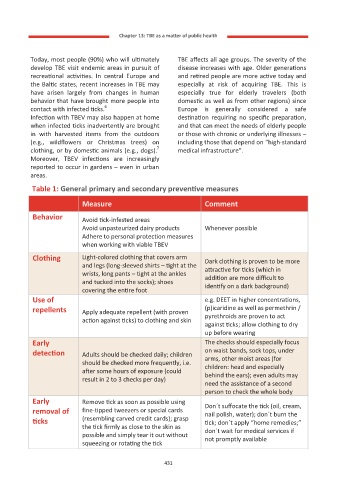
           Table 1: General primary and secondary preventive measures

                         Measure                              Comment
           Behavior      Avoid tick-infested areas

                         Avoid unpasteurized dairy products   Whenever possible
                         Adhere to personal protection measures
                         when working with viable TBEV
           Clothing      Light-colored clothing that covers arm   Dark clothing is proven to be more
                         and legs (long-sleeved shirts – tight at the
                                                              attractive for ticks (which in
                         wrists, long pants – tight at the ankles
                                                              addition are more difficult to
                         and tucked into the socks); shoes
                                                              identify on a dark background)
                         covering the entire foot
           Use of                                             e.g. DEET in higher concentrations,
           repellents    Apply adequate repellent (with proven   (p)icaridine as well as permethrin /
                         action against ticks) to clothing and skin   pyrethroids are proven to act
                                                              against ticks; allow clothing to dry
                                                              up before wearing
           Early                                              The checks should especially focus
           detection     Adults should be checked daily; children   on waist bands, sock tops, under
                                                              arms, other moist areas (for
                         should be checked more frequently, i.e.   children: head and especially
                         after some hours of exposure (could   behind the ears); even adults may
                         result in 2 to 3 checks per day)
                                                              need the assistance of a second
                                                              person to check the whole body
           Early         Remove tick as soon as possible using
                                                              Don´t suffocate the tick (oil, cream,
           removal of    fine-tipped tweezers or special cards   nail polish, water); don´t burn the
           ticks         (resembling carved credit cards); grasp   tick; don´t apply “home remedies;”
                         the tick firmly as close to the skin as
                                                              don´t wait for medical services if
                         possible and simply tear it out without
                                                              not promptly available
                         squeezing or rotating the tick

                                                  438
                                                  431

