


Page 323 - TBE_Book_V2_2019
P. 323
Chapter 12b: TBE in Kazakhstan


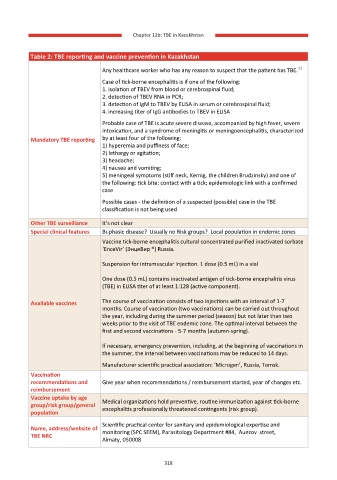
           Table 2: TBE reporting and vaccine prevention in Kazakhstan
                                                                                         11
                               Any healthcare worker who has any reason to suspect that the patient has TBE.

                               Case of tick-borne encephalitis is if one of the following:
                               1. isolation of TBEV from blood or cerebrospinal fluid;
                               2. detection of TBEV RNA in PCR;
                               3. detection of IgM to TBEV by ELISA in serum or cerebrospinal fluid;
                               4. increasing titer of IgG antibodies to TBEV in ELISA

                               Probable case of TBE is acute severe disease, accompanied by high fever, severe
                               intoxication, and a syndrome of meningitis or meningoencephalitis, characterized
          Mandatory TBE reporting   by at least four of the following:
                               1) hyperemia and puffiness of face;
                               2) lethargy or agitation;
                               3) headache;
                               4) nausea and vomiting;
                               5) meningeal symptoms (stiff neck, Kernig, the children Brudzinsky) and one of
                               the following: tick bite; contact with a tick; epidemiologic link with a confirmed
                               case

                               Possible cases - the definition of a suspected (possible) case in the TBE
                               classification is not being used

          Other TBE surveillance   It’s not clear
          Special clinical features   Bi-phasic disease?  Usually no Risk groups?  Local population in endemic zones
                               Vaccine tick-borne encephalitis cultural concentrated purified inactivated sorbate
                               ‘EnceVir’ (ЭнцеВир ®) Russia.

                               Suspension for intramuscular injection. 1 dose (0.5 mL) in a vial

                               One dose (0.5 mL) contains inactivated antigen of tick-borne encephalitis virus
                               (TBE) in ELISA titer of at least 1:128 (active component).

          Available vaccines   The course of vaccination consists of two injections with an interval of 1-7
                               months. Course of vaccination (two vaccinations) can be carried out throughout
                               the year, including during the summer period (season) but not later than two
                               weeks prior to the visit of TBE endemic zone. The optimal interval between the
                               first and second vaccinations - 5-7 months (autumn-spring).

                               If necessary, emergency prevention, including, at the beginning of vaccinations in
                               the summer, the interval between vaccinations may be reduced to 14 days.
                               Manufacturer scientific practical association: ‘Microgen’, Russia, Tomsk.
          Vaccination
          recommendations and   Give year when recommendations / reimbursement started, year of changes etc.
          reimbursement
          Vaccine uptake by age   Medical organizations hold preventive, routine immunization against tick-borne
          group/risk group/general
          population           encephalitis professionally threatened contingents (risk group).
                               Scientific practical center for sanitary and epidemiological expertise and
          Name, address/website of
          TBE NRC              monitoring (SPC SEEM), Parasitology Department #84,  Auezov  street,
                               Almaty, 050008


                                                  318

