


Page 97 - TBE_Book_V2_2019
P. 97
Chapter 4: Pathogenesis of TBE


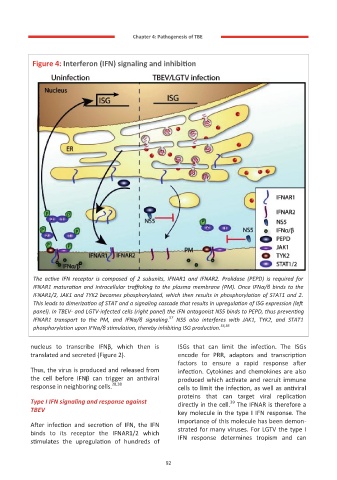
           Figure 4: Interferon (IFN) signaling and inhibition


           The  active  IFN  receptor  is  composed  of  2  subunits,  IFNAR1  and  IFNAR2.  Prolidase  (PEPD)  is  required  for
           IFNAR1 maturation and intracellular trafficking to the plasma membrane (PM). Once IFNα/β binds to the
           IFNAR1/2, JAK1 and TYK2 becomes phosphorylated, which then results in phosphorylation of STAT1 and 2.
           This leads to dimerization of STAT and a signaling cascade that results in upregulation of ISG expression (left
           panel). In TBEV- and LGTV-infected cells (right panel) the IFN antagonist NS5 binds to PEPD, thus preventing
                                                   57
           IFNAR1  transport  to  the  PM,  and  IFNα/β  signaling.   NS5  also  interferes  with  JAK1,  TYK2,  and  STAT1
           phosphorylation upon IFNα/β stimulation, thereby inhibiting ISG production. 55,56

          nucleus  to  transcribe  IFNβ,  which  then  is   ISGs  that  can  limit  the  infection.  The  ISGs
          translated and secreted (Figure 2).         encode  for  PRR,  adaptors  and  transcription
                                                      factors  to  ensure  a  rapid  response  after
          Thus, the virus is produced and released from   infection.  Cytokines  and  chemokines  are  also
          the  cell  before  IFNβ  can  trigger  an  antiviral   produced which activate and recruit immune
          response in neighboring cells. 28,38        cells to limit the infection, as well as antiviral
                                                      proteins  that  can  target  viral  replication
          Type I IFN signaling and response against                  39
                                                      directly in the cell.  The IFNAR is therefore a
          TBEV
                                                      key molecule in the type I IFN response. The
                                                      importance of this molecule has been demon-
          After  infection  and  secretion  of  IFN,  the  IFN   strated for many viruses. For LGTV the type I
          binds  to  its  receptor  the  IFNAR1/2  which
          stimulates  the  upregulation  of  hundreds  of   IFN  response  determines  tropism  and  can


                                                     92

