


Page 151 - TBE_Book_V2_2019
P. 151
Chapter 8: TBE in animals


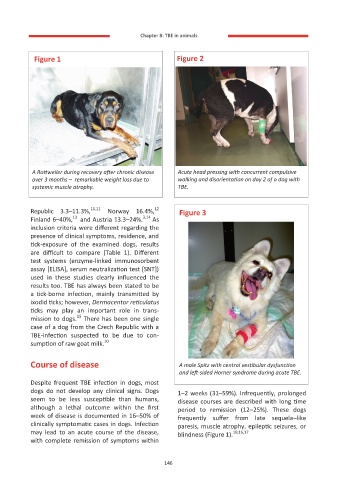
           Figure 1                                  Figure 2


           A Rottweiler during recovery after chronic disease   Acute head pressing with concurrent compulsive
           over 3 months –  remarkable weight loss due to   walking and disorientation on day 2 of a dog with
           systemic muscle atrophy.                   TBE.


                                               12
          Republic  3.3–11.3%, 10,11   Norway  16.4%,    Figure 3
                       13
          Finland 6–40%,   and Austria 13.3–24%. 3,14  As
          inclusion criteria were different regarding the
          presence of clinical symptoms, residence, and
          tick-exposure  of  the  examined  dogs,  results
          are  difficult  to  compare  (Table  1).  Different
          test  systems  (enzyme-linked  immunosorbent
          assay [ELISA], serum neutralization test [SNT])
          used  in  these  studies  clearly  influenced  the
          results too. TBE has always been stated to be
          a  tick-borne  infection,  mainly  transmitted  by
          ixodid ticks; however, Dermacentor reticulatus
          ticks  may  play  an  important  role  in  trans-
                        15
          mission to dogs.  There has been one single
          case of a dog from the Czech Republic with a
          TBE-infection  suspected  to  be  due  to  con-
                                10
          sumption of raw goat milk.

          Course of disease                           A male Spitz with central vestibular dysfunction
                                                      and left-sided Horner syndrome during acute TBE.
          Despite  frequent  TBE  infection  in  dogs,  most
          dogs  do  not  develop  any  clinical  signs.  Dogs   1–2 weeks (31–59%). Infrequently, prolonged
          seem  to  be  less  susceptible  than  humans,   disease courses are described with long time
          although  a  lethal  outcome  within  the  first   period  to  remission  (12–25%).  These  dogs
          week of disease is documented in 16–50% of   frequently  suffer  from  late  sequela–like
          clinically symptomatic cases in dogs. Infection   paresis, muscle atrophy, epileptic seizures, or
          may  lead  to  an  acute  course  of  the  disease,   blindness (Figure 1). 10,16,17
          with complete remission of symptoms within


                                                  146
                                                  146

