


Page 116 - TBE_Book_V2_2019
P. 116
Chapter 5: TBE in adults


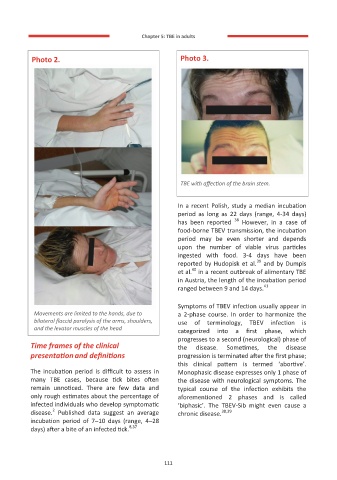
          Photo 2.                                    Photo 3.


                                                      TBE with affection of the brain stem.


                                                      In  a  recent  Polish  study  a  median  incubation
                                                      period  as  long  as  22  days  (range,  4-34  days)
                                                                      38
                                                      has  been  reported    However,  in  a  case  of
                                                      food-borne TBEV transmission, the incubation
                                                      period  may  be  even  shorter  and  depends
                                                      upon  the  number  of  viable  virus  particles
                                                      ingested  with  food.  3-4  days  have  been
                                                                             39
                                                      reported by Hudopisk et al.  and by Dumpis
                                                          40
                                                      et al.  in a recent outbreak of alimentary TBE
                                                      in Austria, the length of the incubation period
                                                                               41
                                                      ranged between 9 and 14 days.
                                                      Symptoms of TBEV infection usually appear in
           Movements are limited to the hands, due to   a  2-phase  course.  In  order  to  harmonize  the
           bilateral flaccid paralysis of the arms, shoulders,   use  of  terminology,  TBEV  infection  is
           and the levator muscles of the head
                                                      categorized  into  a  first  phase,  which
                                                      progresses to a second (neurological) phase of
          Time frames of the clinical                 the   disease.   Sometimes,   the   disease
          presentation and definitions                progression is terminated after the first phase;
                                                      this  clinical  pattern  is  termed  ‘abortive’.
          The  incubation  period  is  difficult  to  assess  in   Monophasic disease expresses only 1 phase of
          many  TBE  cases,  because  tick  bites  often   the disease with neurological symptoms. The
          remain  unnoticed.  There  are  few  data  and   typical  course  of  the  infection  exhibits  the
          only rough estimates about the percentage of   aforementioned  2  phases  and  is  called
          infected individuals who develop symptomatic   ‘biphasic’.  The  TBEV-Sib  might  even  cause  a
                 2
          disease.   Published  data  suggest  an  average   chronic disease. 38,39
          incubation  period  of  7–10  days  (range,  4–28
          days) after a bite of an infected tick. 8,37


                                                  111
                                                  111

